# Gravity Spy Tutorial

## Level 1

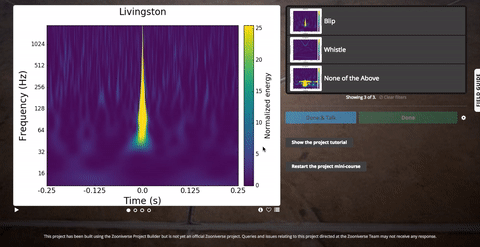
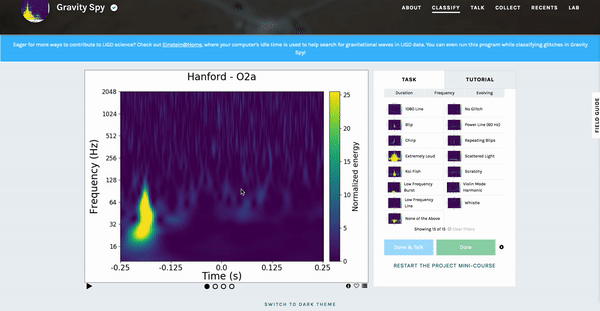
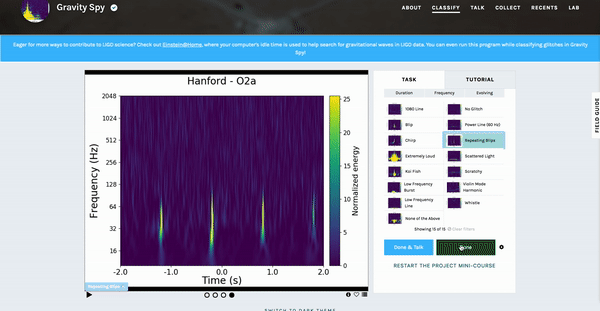
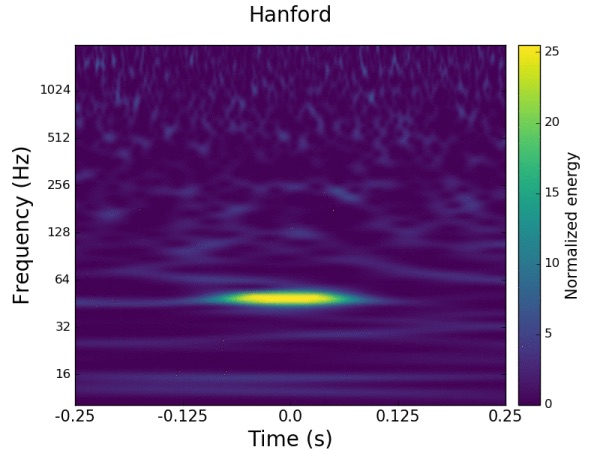
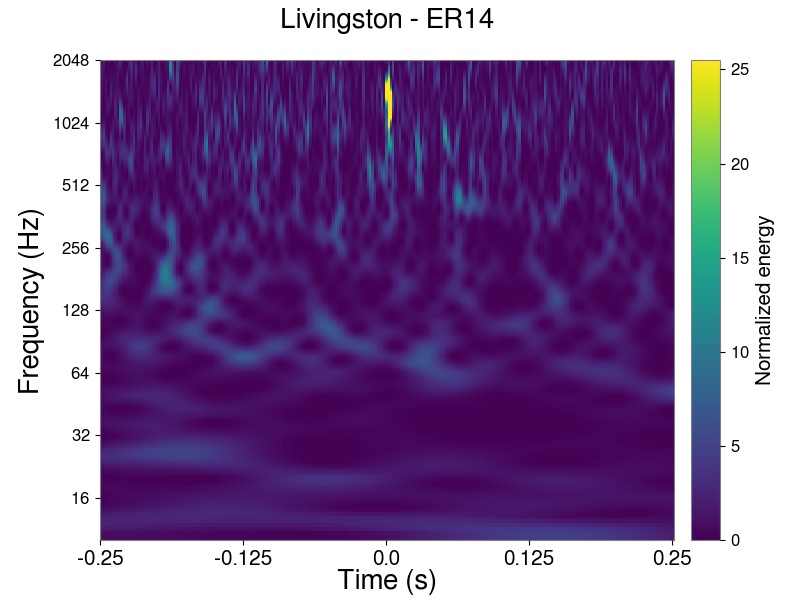
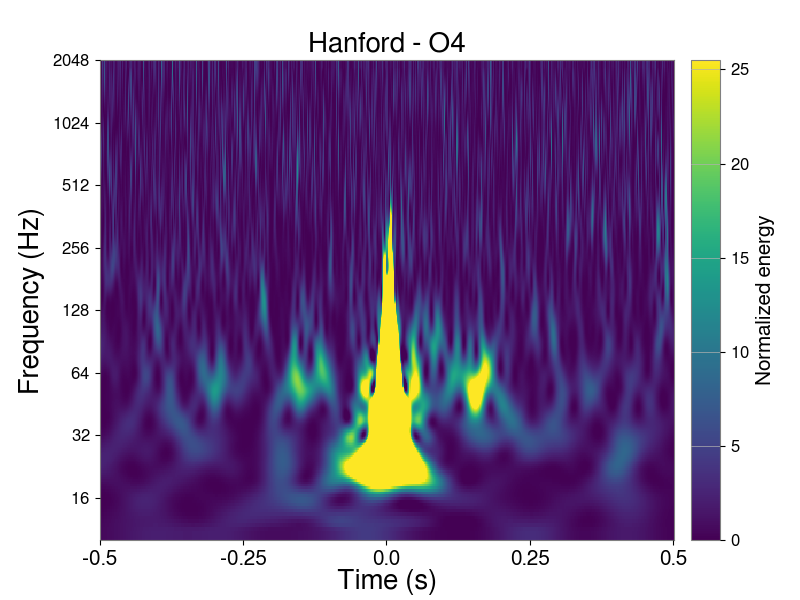
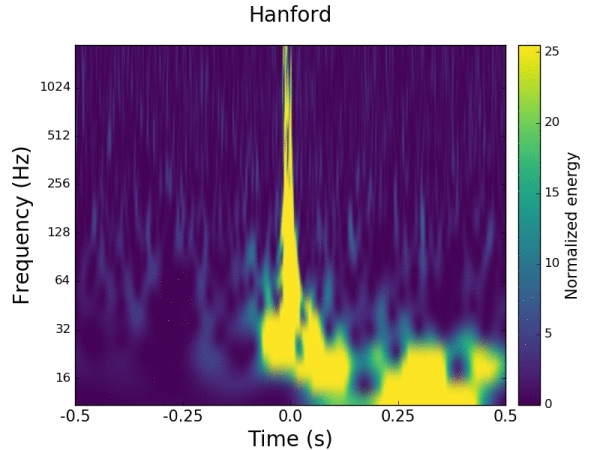
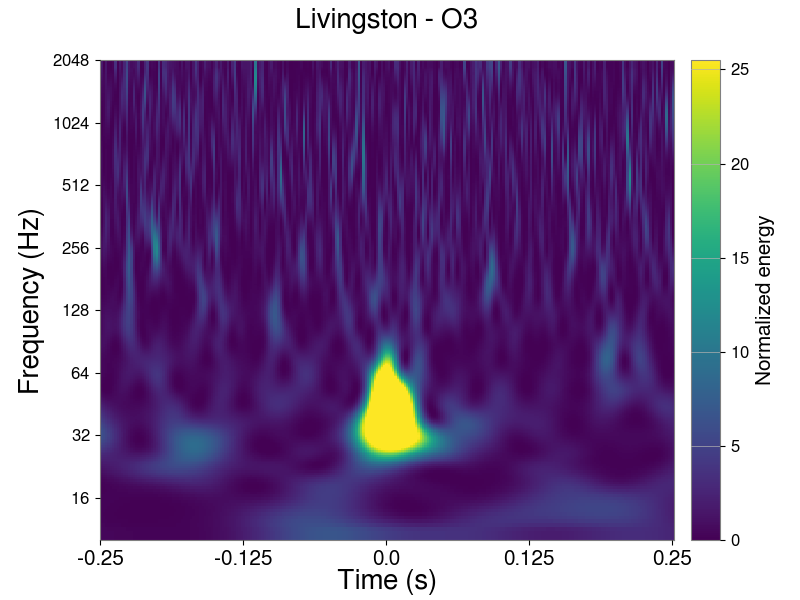
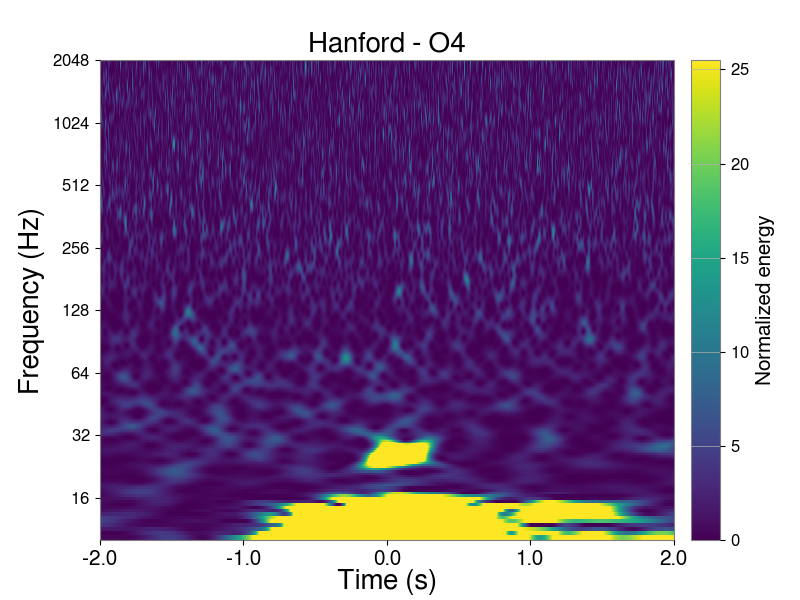
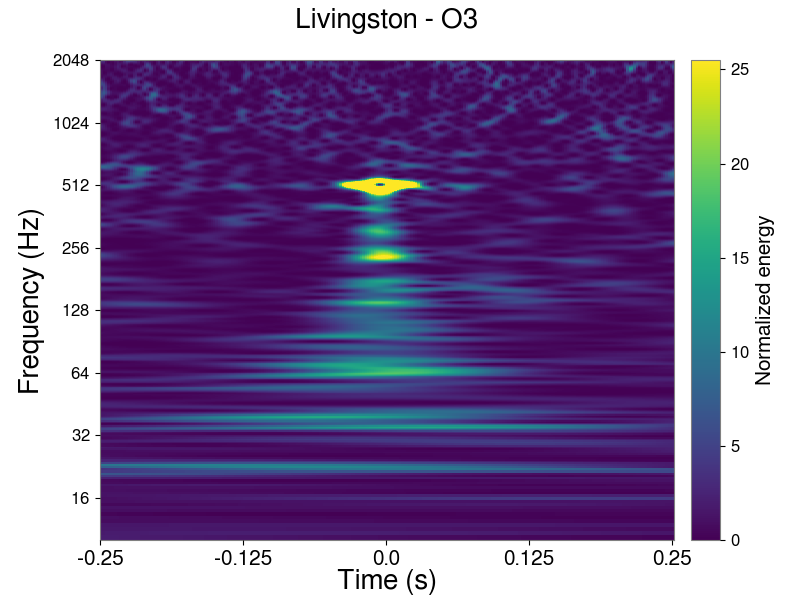
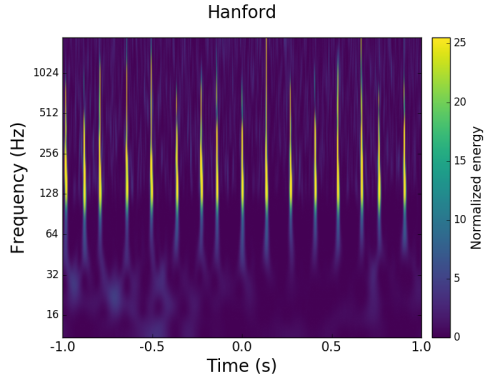
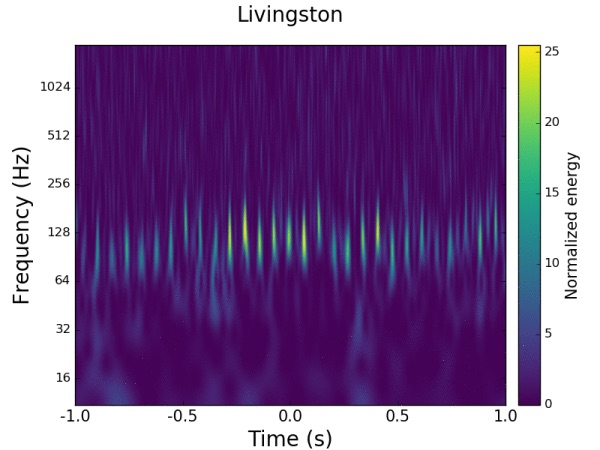
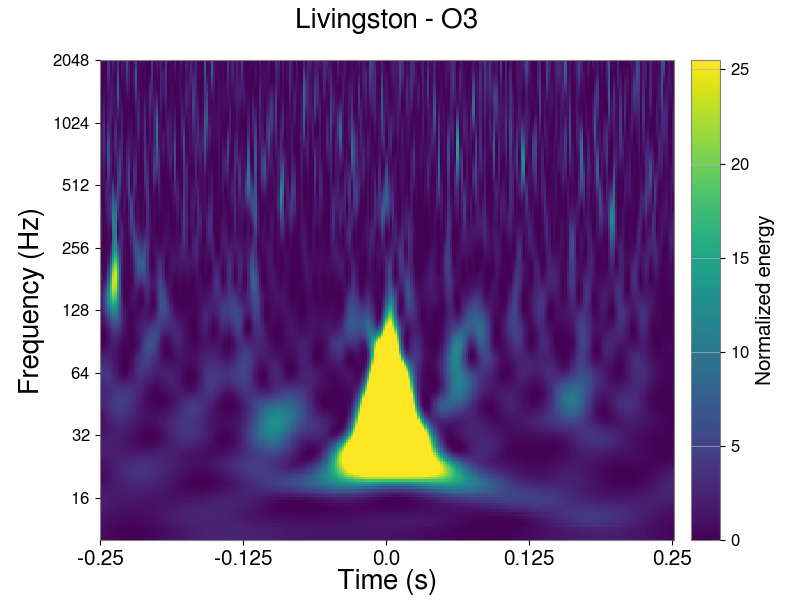
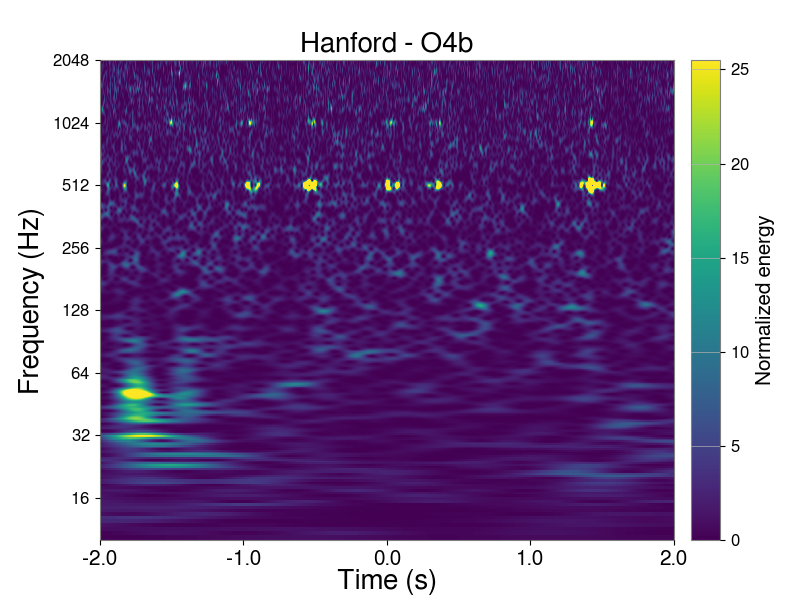
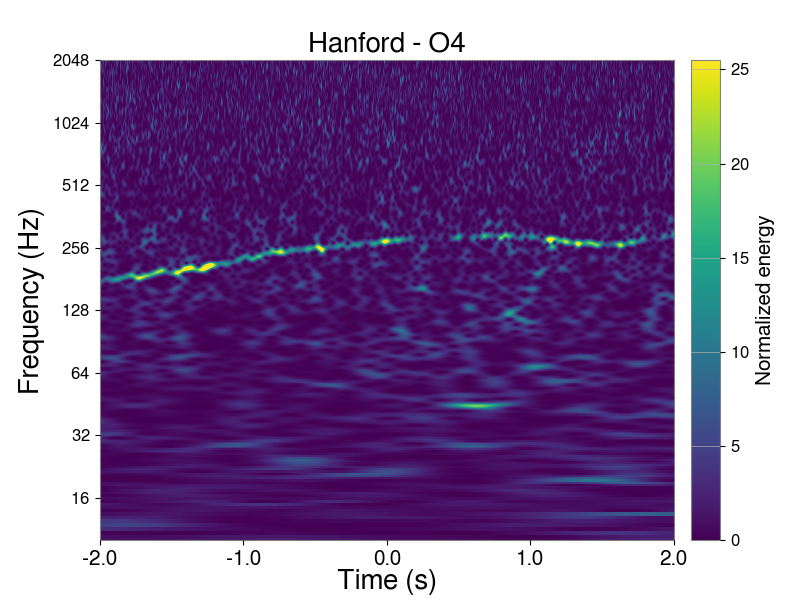
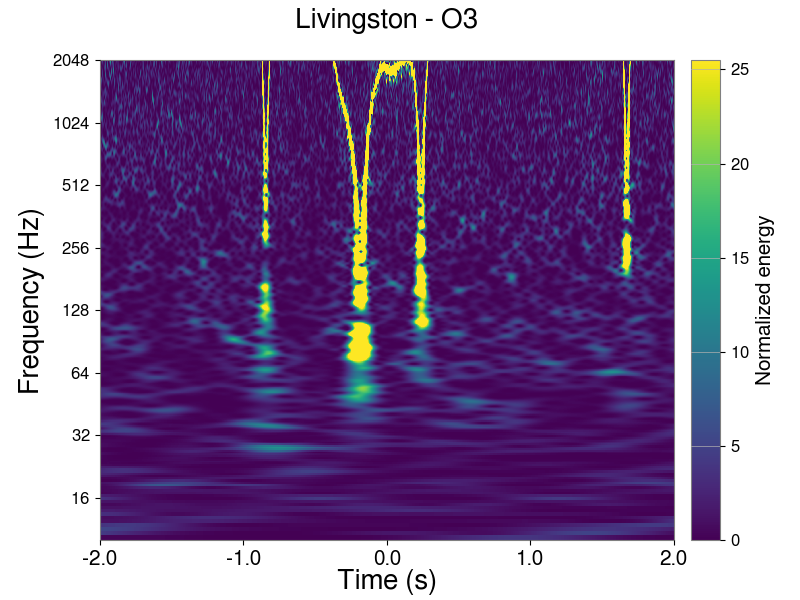
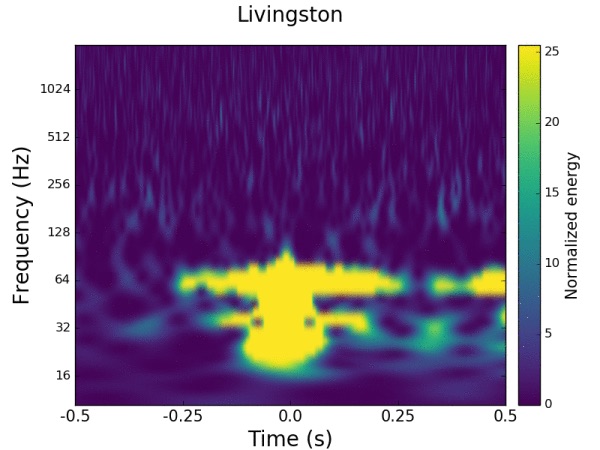
Welcome to Gravity Spy! The image you are looking at is called a spectrogram. It is showing a glitch from LIGO's data, which is a signal that can hinder the search for gravitational waves. The spectrogram is plotted in time-frequency space, which means the horizontal axis shows how long the glitch lasts and the vertical axis shows the frequencies that the glitch is 'ringing' at. The colors represent the loudness of the glitch, which indicates how much this glitch moved the arms of the detector. This particular glitch came from the observatory in Hanford, Washington.
To classify, pick the category that best resembles the displayed glitch. The glitch in question is at the center of the image (at Time=0.0).

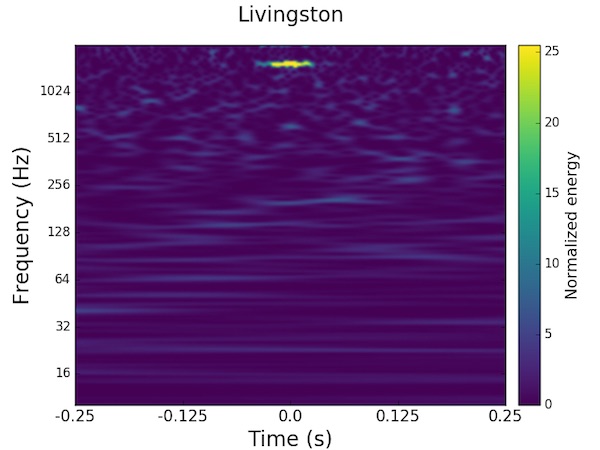
This is an example of a Blip glitch. Please classify each glitch as only one single morphology!
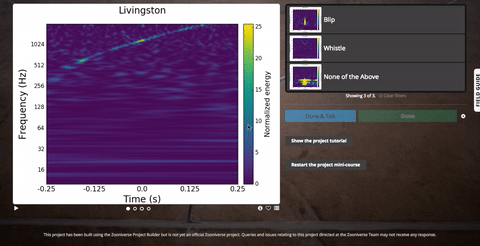
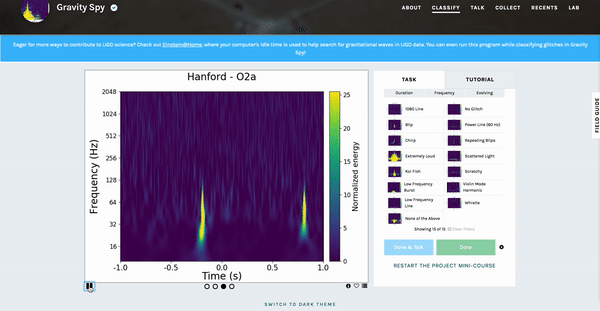
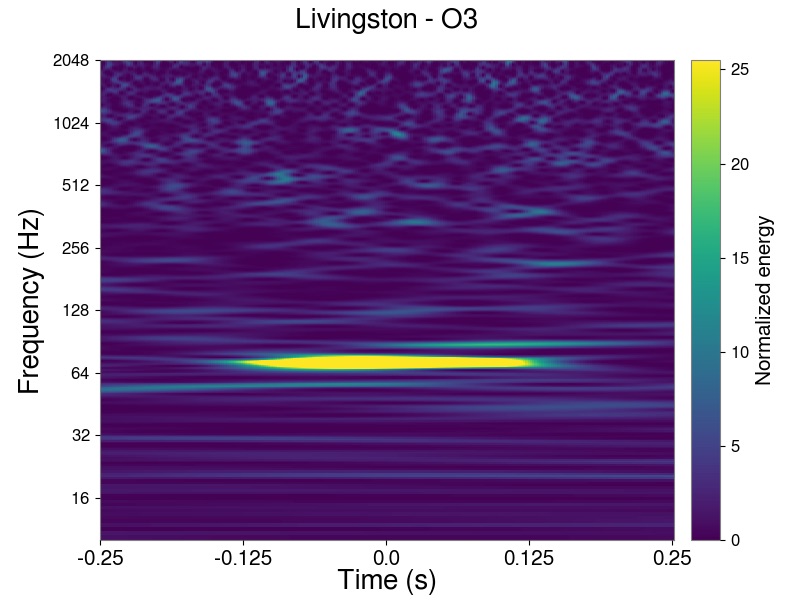
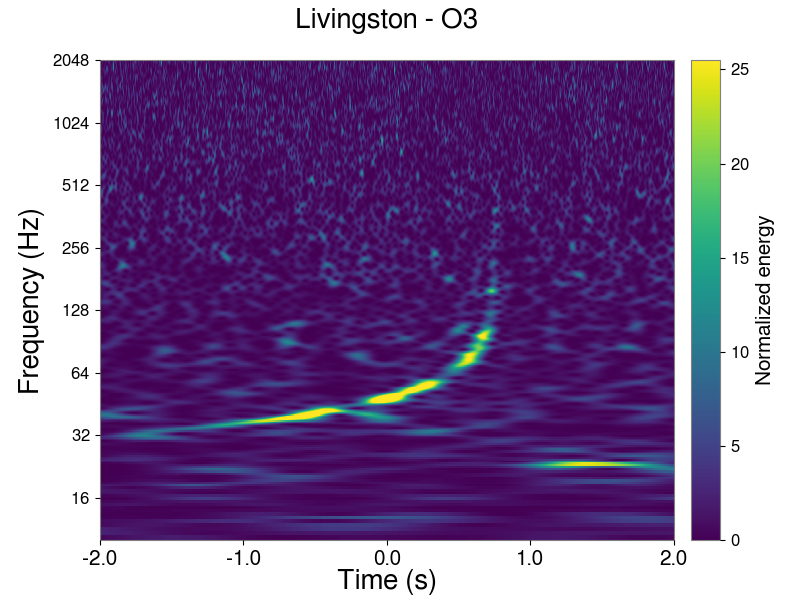
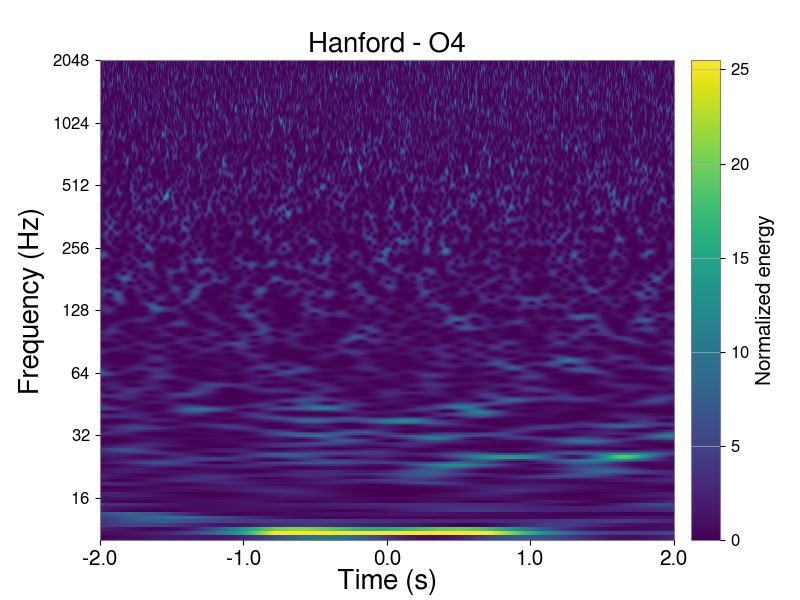
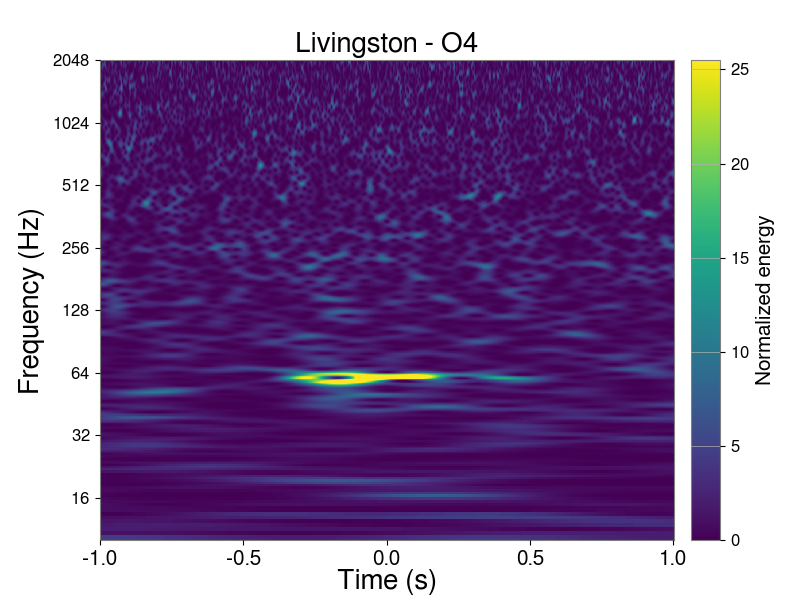
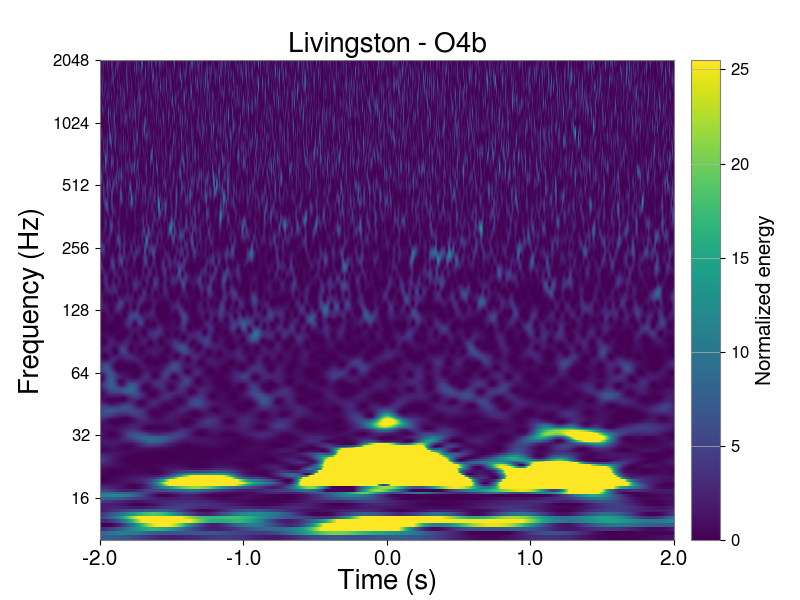
You are provided time windows that are all centered on the same glitch. This is helpful for looking at glitches that happen over long periods of time, like the example of a whistle glitch shown above.
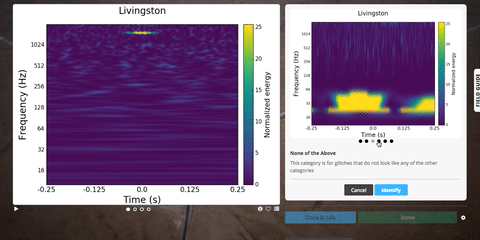
Though we have tried to capture most major types of glitches, there are a huge number of different morphologies, and new glitches appear in the data as the detector becomes more and more sensitive. That’s why we’ve created a “catch-all”: if the glitch does not fit into any of the set categories, label it as None of the Above.

## Level 2

Welcome to level 2: Galactic Supernova! Different glitch morphologies often look quite similar, which is one of the reasons computers can have such a hard time classifying these noise features.

## Level 3
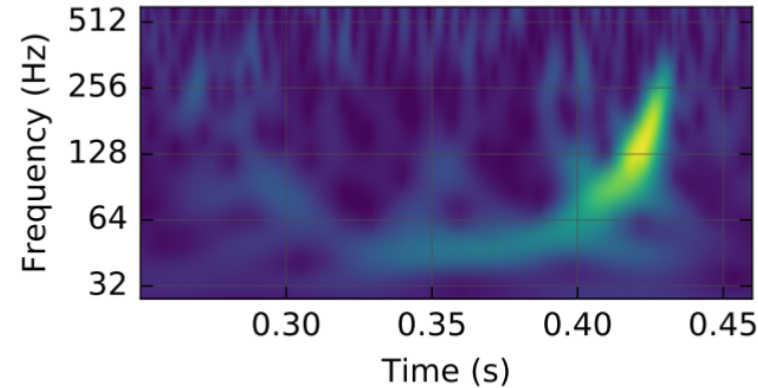
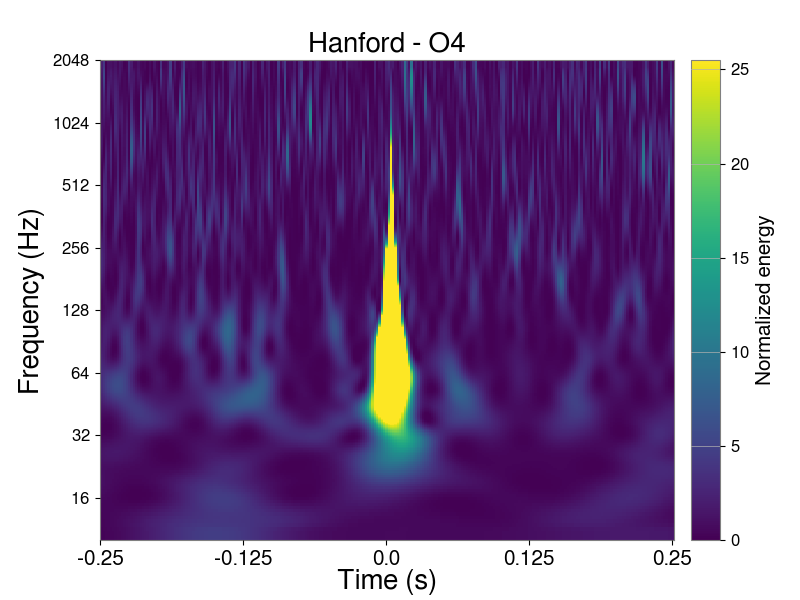
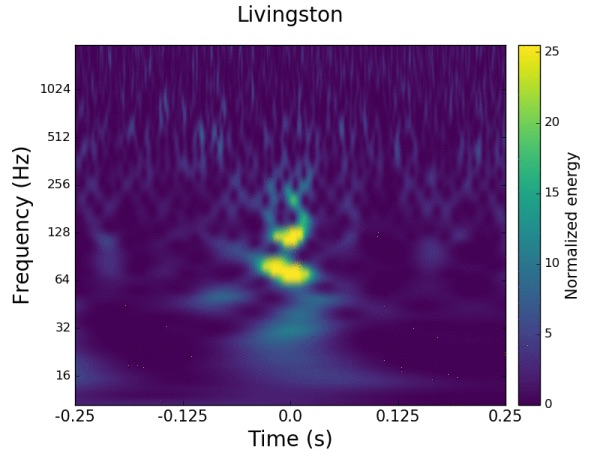
A new classification option has been added for you to choose from - chirp. Chirps are the characteristic shape of gravitational wave signals that originate from the merger of compact astrophysical objects, such as black holes and neutron stars. Chirps sweep upwards in frequency over time, and glitches that look chirpy are particularly troublesome in our search for gravitational waves!
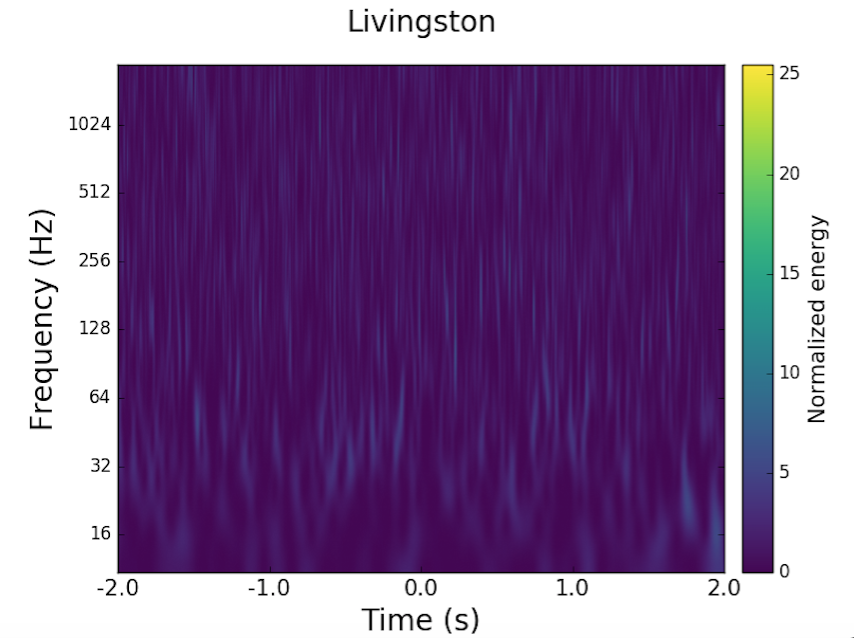
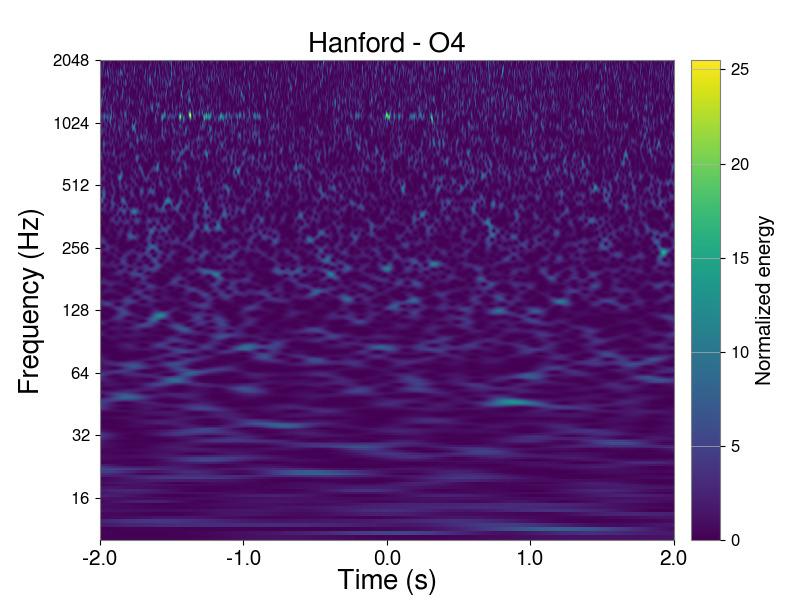
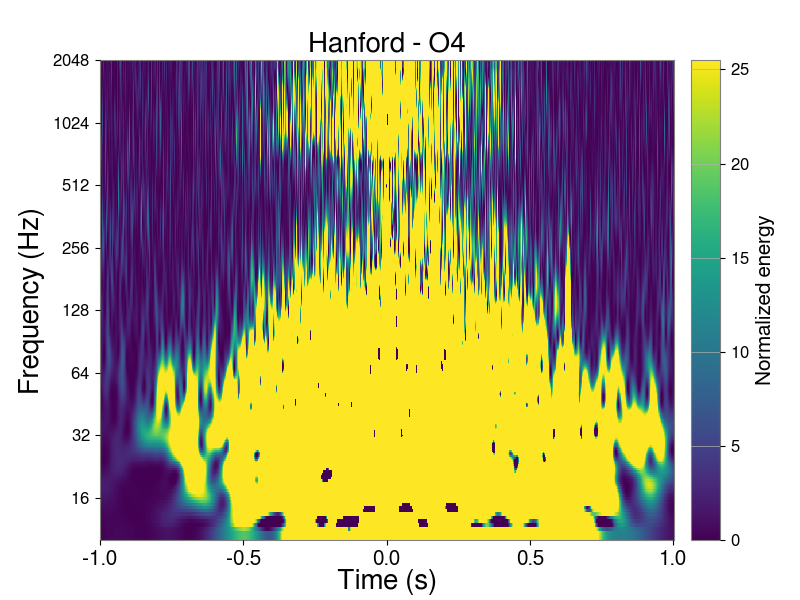
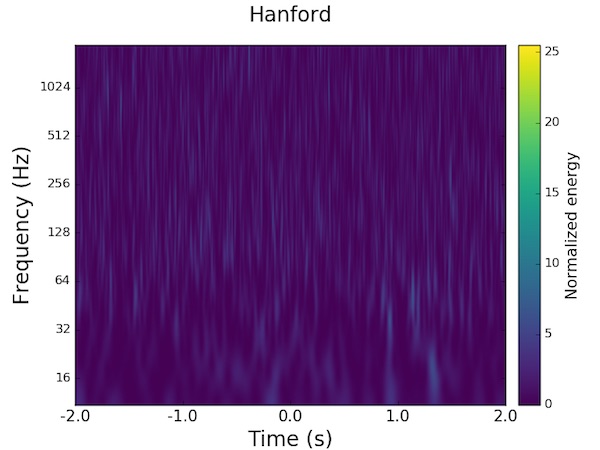
Sometimes an image will look like there is no glitch in the frame. If this is the case, classify this glitch as No Glitch.

## Level 4
Welcome to level 4: Neutron Star-Black Hole Merger! We've added a handful of new types of glitches in this workflow. But most importantly, you will be seeing glitches that our computer algorithms are even less confident in, so your classifications are extremely helpful in teaching the algorithms to better classify glitches.

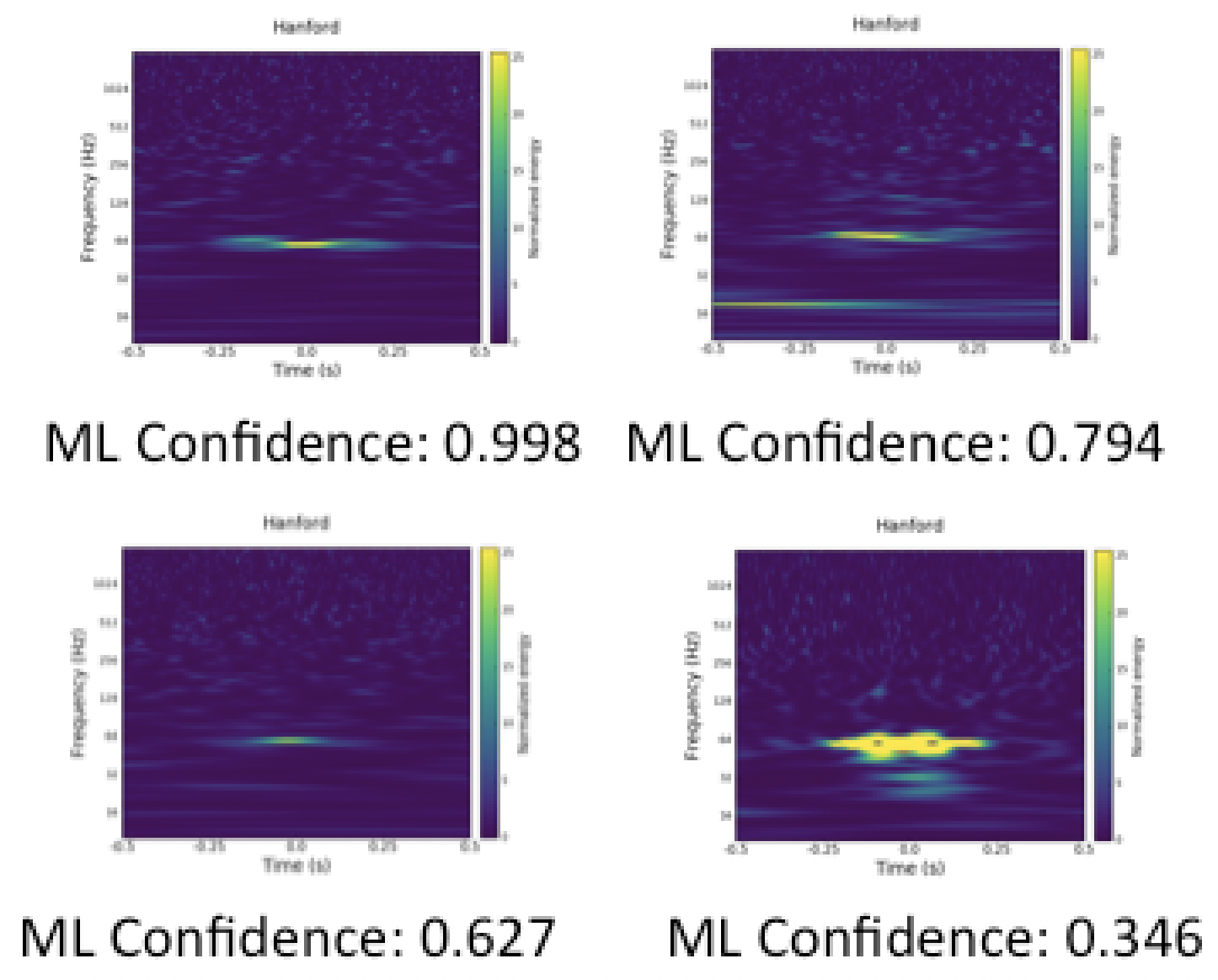
This means that glitches will generally be more difficult to classify. The image above shows a cartoon of what we mean: as glitches of a particular class (in this case, Power Line glitches) become less like the prototypical example, the confidence of the machine learning (ML) drops.
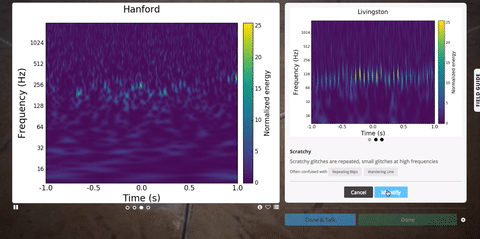
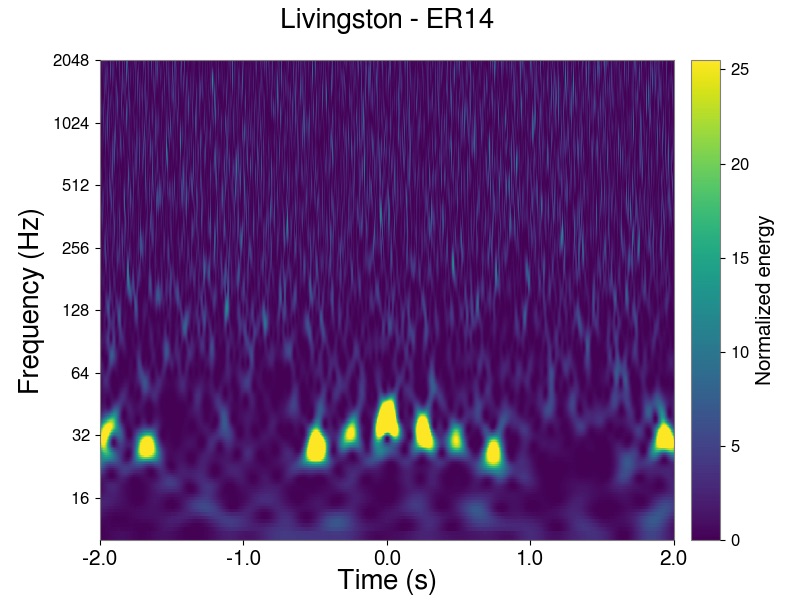
A few of the new glitches that we've introduced in this workflow are very similar to other types of glitches when viewed on a short timescale. However, when "zoomed out" to longer durations, you can tell that the glitches are correlated to other nearby activity. Two examples of this are the "Repeating Blips" and "Scratchy" glitches, which may be confused with standard Blip glitches if you only look at the shortest duration image.
## Level 5

Congratulations and welcome to level 5: Binary Black Hole Merger! You will now see all the categories of LIGO glitches currently recognized by the Gravity Spy project. Similar to the previous level, you will be seeing glitches that our computer algorithms are even less confident in, so your classifications are extremely helpful in teaching the algorithms to better classify glitches.
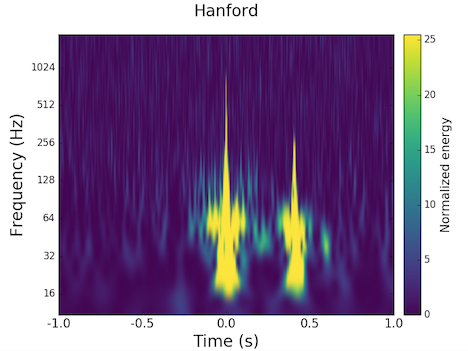
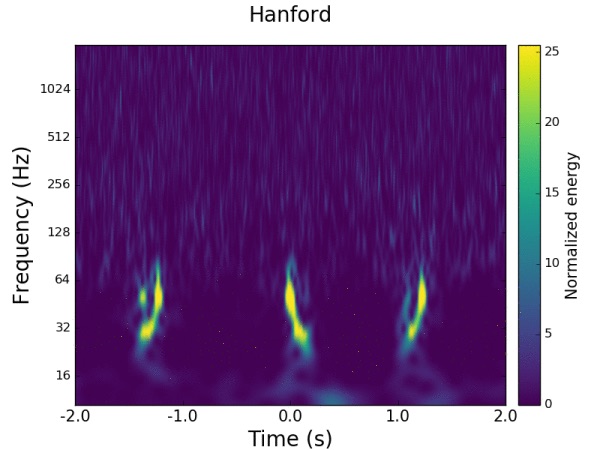
Keep in mind, if there are multiple glitches in the same image, classify the one in the middle that crosses at t=0. Though these cute koi fish glitches look like they are holding hands, they are indeed two separate glitches.

However, certain glitch types, such as repeating blips, scratchy, and paired doves are related to similar, nearby glitches. For such categories, it helps to zoom out to longer time durations and look for similar glitches nearby in time.
# Answer Options

Reference images for each answer option.

## 1080 Line
## 1400 Ripple
## 70 Hz Line
## Air Compressor (50 Hz)
## Blip
## Chirp
## Crown
## Extremely Loud
## Helix
## High Frequency Burst
## Koi Fish
## Light Modulation
## Low Frequency Blip
## Low Frequency Burst
## Low Frequency Line
## No Glitch
## Paired Doves
## Pizzicato
## Power Line (60 Hz)
## Repeating Blips
## Scattered Light
## Scratchy
## Tomte
## Violin Mode Harmonic
## Wandering Line
## Whistle
## None of the Above
System and task instructions
System instruction
Task instruction
Which Gravity Spy glitch class best matches the central event?