**Welcome!! Are you ready to become a Dark Energy Explorer?**

We are on the hunt for distant galaxies to measure Dark Energy for the Hobby-Eberly Telescope Dark Energy Experiment ([HETDEX](https://www.hetdex.org)). In our local universe, Dark Energy is the mysterious term astronomers use to explain why galaxies expand away from each other at an increasing rate.

We are searching for this by creating the largest and most detailed map of the early universe using distant galaxies. These galaxies are 10 billion light years away and we expect to discover millions of them.

But first we need YOU! The galaxies we are looking for are very faint and can easily be confused as noise. They appear as small peaks of signal in a sea of noise created by the telescope’s instrumentation and the night sky. We’ve pinpointed key characteristics to help identify what is a real signal. A human’s eye can do better than any software we’ve developed so far. But with millions of signals to investigate, our small research team can’t do it alone.

Let's run through some steps on how to do this!

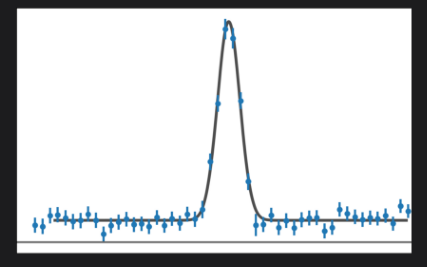
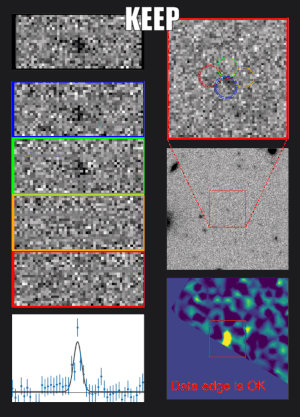
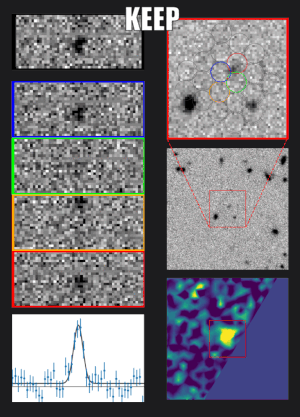
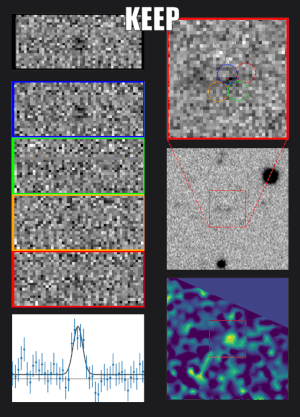
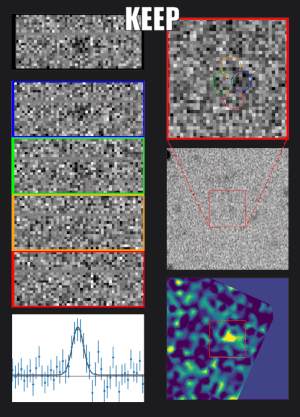
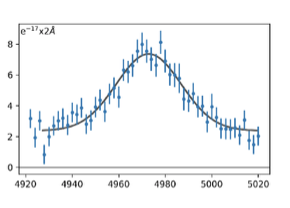
First, we use spectral lines to determine if a astronomical object is real or fake (likely noise from the telescope and instrument). Spectral lines are often used to identify atoms and molecules. A shift in the positions of the spectral line(s) in our data tells us the distance to the galaxy so we can create a 3D map of the night sky.

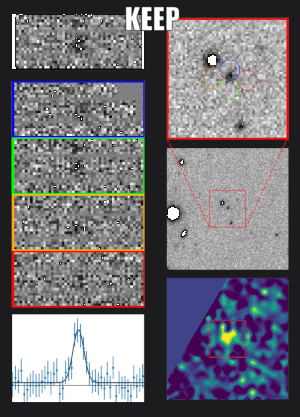
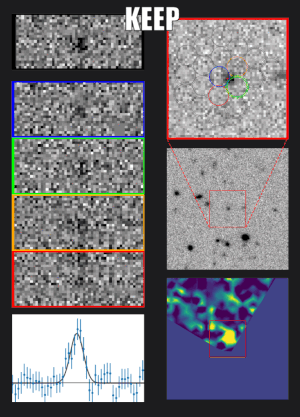
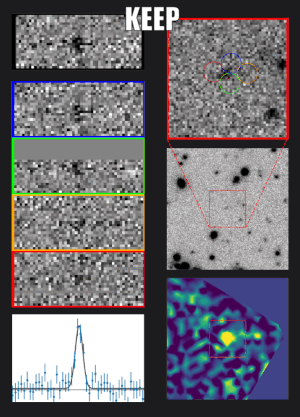
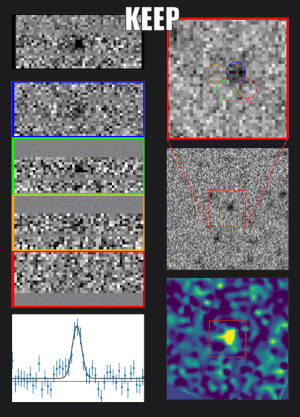
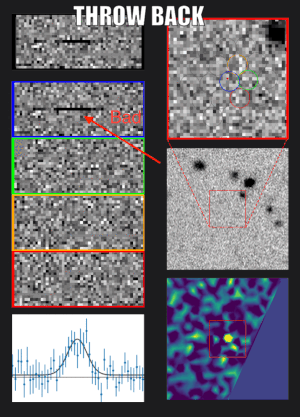
The spectrum is shown in the bottom panel of each zooniverse image. If the blue dots and black lines fit each other well, this is a real source!  We are working very hard to make sure everything is a real source, and we are now pushing into regions where it is harder statistically to figure out if a source is real. So in these sets, we expect below 50% success of being real. But this means that we really need your help! If it has a good spectral line, keep looking at more information to determine if it is a real galaxy or noise that needs to be 'thrown back' and looked at again!
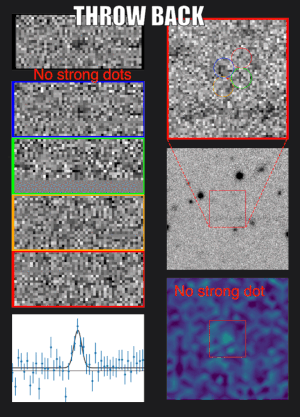
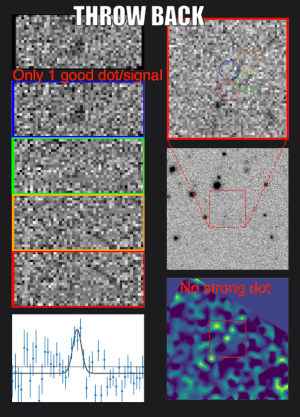
Next, we spot real galaxies using the top left images (black and colored boxes). These are showing the fiber images from our telescope. They appear as small black dots of signal in a sea of noise. Those are the galaxies we want to catch!

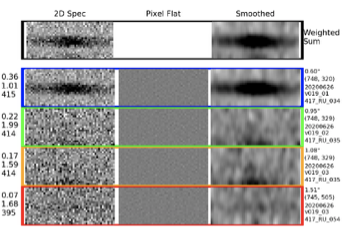
Each signal is a composite of several spectra tiling a circular region of the sky. These regions are shown as colored and grey circles in the top-right image. The spectrum on the last page was a weighted sum of all those fibers. But we get much more information from individual fiber spectra. The top left images (black, and colored rectangles) show individual fiber spectra as they look when they are captured on our telescope detector.

Each colored box contains a small part of the spectrum where we have detected signal. The black dots are the signal, while the grey background is noise. Those dots are photons that have been traveling for up to 11 billion years, coming from a galaxy that is producing a lot of stars, and they finally made it into our instrument.

The top left box (black outline) is the sum of all the colored boxes. The more clear and strong the dot appears in this box, the better we trust the signal. Additionally, it’s important to see signal in individual fiber spectra. If we see dots in two or more of the colored boxes we have high confidence that the signal is real. If it is only in one, then it’s more likely to be noise. So if you see faint dots in any the boxes, this means it is a Real galaxy, choose "Keep this Galaxy!"

We also want to see a good signal in the blue and yellow image at the bottom right. If you see a round bright yellow dot that's a good sign of a real galaxy. choose "Keep this Galaxy!"
The following images are consecutive frames from a tutorial animation, in order.
These images come from the 10m [Hobby-Eberly Telescope](https://mcdonaldobservatory.org/) in West Texas.

Black holes are real objects! Here is what they look like so you don't confuse them with a bad detection:
Black Hole:

Black holes will appear like a larger wide oval rather than a dot. For example,
Black holes will also have a broad spectral line that is much wider than the usual tall slender spectral line.
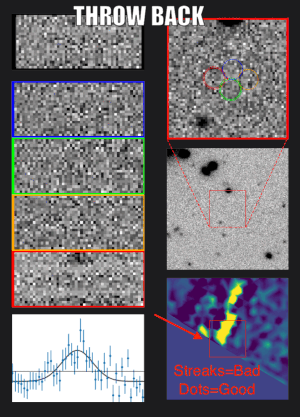
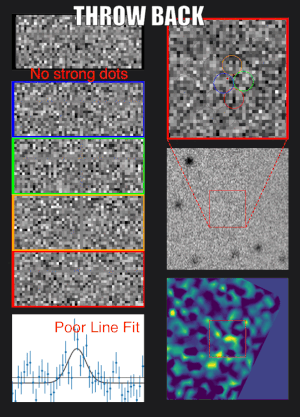
A galaxy that is fake or noisy will also go into the "Throw back. . ." category to be looked at again.

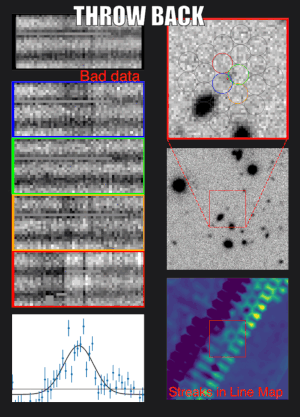
Noise may look like a really unmatched spectral line or no dots in one or none of the colored rectangles. For both of these cases, choose "Throw back. . .”

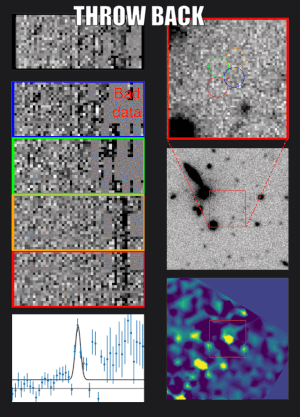
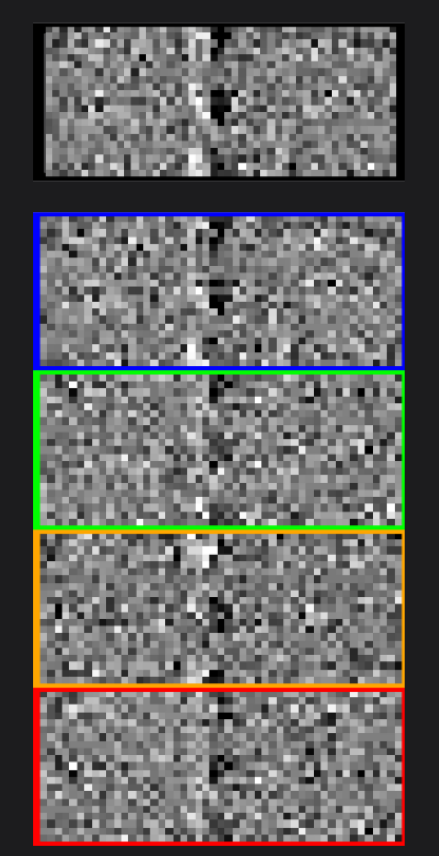
Some images are noise from the telescope or a defect in the data our telescope is collecting. Here are some examples:
The following images are consecutive frames from a tutorial animation, in order.
Below is another example of a telescope calibration issue that would be to throwback:
System and task instructions
System instruction
Task instruction
Is this a Real Galaxy to KEEP or is it Noise to THROW BACK?